By Pastor Andrews - Mar 10, 2026 #death #euthanasia
M.A.I.D. in Hell
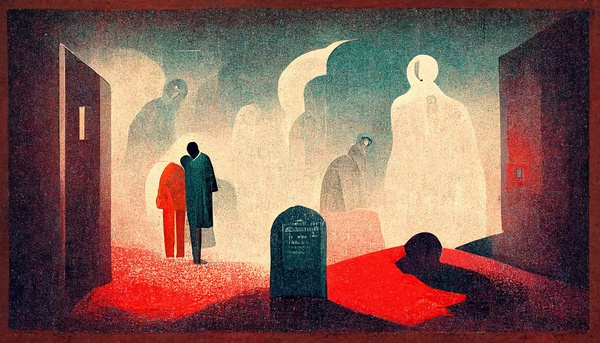
The push toward the legalization of euthanasia continues to gain momentum. New York may soon become the next state to legalize assisted suicide, joining twelve other states and Washington, D.C. Meanwhile, nearly 100,000 people in Canada have died by assisted suicide since M.A.I.D. (Medical Assistance in Dying) became national policy. What was once presented as a rare and compassionate exception has grown rapidly; the practice now accounts for roughly one in twenty deaths in Canada. Studies have also shown that in states where assisted suicide is legal, the overall suicide rate has increased.
Proponents portray assisted suicide as “dying with dignity,” an act of compassion, even something noble. Some ministers have gone so far as to condone the practice as an expression of mercy. Lawmakers in Illinois have attempted to soften the reality with legal language, declaring, “Death in accordance with this Act shall not be designated a suicide or homicide.” The redefinition does not stop there. By ensuring that life insurance policies will still pay out, the law further normalizes what would otherwise be recognized as self-destruction.
The rising tide of secularism has brought with it a radical emphasis on personal autonomy- an autonomy that ultimately expresses itself in the choice to end one’s own life. Satan’s ancient lie to Adam and Eve, that they would become “like God”, remains just as appealing in today’s cultural landscape. Humanity continues to grasp for divine authority, claiming the right to determine not only how to live, but also when and how to die.
There may also be a deeper, more troubling motivation behind this movement. Lydia Dugdale, a Columbia University professor and ethicist, has observed, “The practice of assisted suicide relieves people of their responsibility to care for dying family members. It releases communities from their duty to address social isolation and absolves health care systems of their obligation to provide support services to the dying or those living with disabilities.” In other words, assisted suicide can become a convenient substitute for compassion, allowing society to avoid the costly work of caring for the vulnerable.
Christians believe that human life is sacred because we are created in the image of God. Life is not a possession we own, but a gift entrusted to us by our Creator. Even when we “walk through the valley of the shadow of death,” we affirm that our lives belong to Him. We were created for His glory, and history, and personal experience- demonstrate that God often uses pain and suffering for His redemptive purposes. As the Author of life, God alone has the authority to determine both its quality and its length.
Furthermore, there is nothing dignified about death itself. Death is a grim intruder, a grotesque corruption that ravages the lives of individuals and families alike. Scripture calls it “the last enemy,” an adversary so terrible that it required the death and resurrection of our Lord Jesus Christ to defeat it. As the writer of Hebrews explains: “Because God’s children are human beings, made of flesh and blood, the Son also became flesh and blood. For only as a human being could he die, and only by dying could he break the power of the devil, who had the power of death” (Hebrews 2:14).
At present, the loudest opposition to assisted suicide often comes from the Catholic Church. It is time for the evangelical church to raise its voice as well. If we truly claim to be pro-life, we must treat end-of-life issues with the same seriousness we bring to those surrounding the beginning of life. Also, the more faithfully the church serves those approaching the end of their earthly journey, the less likely they will be to seek death prematurely.
Christians need not approach death with denial or despair. We can face it honestly without becoming morbid. We can prepare for our own passing and for the inevitable deaths of those we love. There may come a time when prayers for healing gradually become prayers for mercy. Facing death is never easy, but believers can do so with grace and peace because Jesus Christ has “abolished death and brought life and immortality to light through the gospel” (2 Timothy 1:10).