By Pastor Andrews - Jul 6, 2026 #American 250 #freedom #redemption
The Greatest Freedom
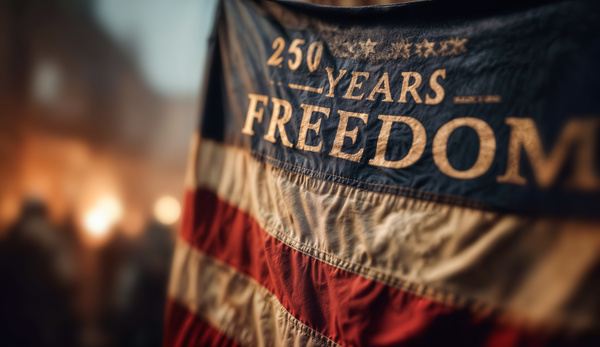
In the wake of our nation's 250th anniversary, it is worth reflecting on how America's Founding Fathers understood liberty. For many of them, freedom was inseparable from biblical morality. They believed that a free people must also be a virtuous people. Although the exact wording is disputed, George Washington consistently emphasized that religion and morality were indispensable supports for political prosperity and good government.
When I was in elementary school, a Bible sat on my teacher's desk. Each morning we recited the Lord's Prayer and pledged allegiance to the flag. That changed after Engel v. Vitale (1962), when the Supreme Court ruled that state-sponsored prayer in public schools was unconstitutional. Since then, many Christians believe our culture has been swept into a riptide of moral relativism.
As America has drifted from its moral moorings, two competing visions of liberty have become increasingly apparent. One view promotes a largely secular understanding of freedom, while the other maintains that religious principles are essential to a stable and flourishing society. One tends to regard moral truth as subjective or evolving; the other insists that enduring moral absolutes are necessary for both individual and national well-being.
These opposing worldviews also differ in their understanding of human nature. A secular perspective often places confidence in education, legislation, and social reform as the primary solutions to society's problems. The biblical worldview, while recognizing the value of those institutions, teaches that the human heart is fundamentally flawed and in need of redemption. Lasting change requires more than external reform; it requires inward transformation.
Yet the Bible presents a view of freedom that reaches far beyond our political debates. Jesus declared, "You shall know the truth, and the truth shall make you free" (John 8:32). He went on to explain that "everyone who commits sin is a slave to sin" (John 8:34). Whenever truth is rejected, some form of bondage follows. Today we see many forms of that bondage: slavery to sinful desires, confusion about identity, and the exaltation of personal autonomy above God's authority.
The greatest crisis facing our nation is not ultimately political, educational, or economic. It is spiritual.
We should honestly ask ourselves whether our nation is happier, safer, or more content after abandoning biblical morality. Or have we become more anxious, more divided, and less secure? The answer seems increasingly evident. Many Americans confuse the freedom to pursue pleasure with the freedom that comes from living in truth. Those are not the same. One often leads to bondage; the other leads to genuine liberty.
True freedom is freedom from the dominion of sin. That is why Jesus said, "If the Son sets you free, you will be free indeed" (John 8:36). It is no coincidence that Scripture's great picture of redemption is Israel's deliverance from slavery in Egypt. Just as Moses led God's people out of physical bondage, Jesus, the true and better Moses, came to deliver sinners from spiritual bondage and bring them into the liberty found only in Him.
The greatest crisis facing our nation is not ultimately political, educational, or economic. It is spiritual. Politics, education, and social programs often address only symptoms, but cannot cure the disease. Only the gospel can reconcile sinners to God and transform the human heart.
As we celebrate the freedoms we continue to enjoy, let us also remember the greatest freedom of all is the freedom Christ purchased through His death and resurrection. And may we do all we can to lead those still captive to sin into the glorious liberty that is found in Jesus Christ alone.