By Pastor Andrews - Nov 2, 2026 #Faith #judas #knowledge
“Is It I?”
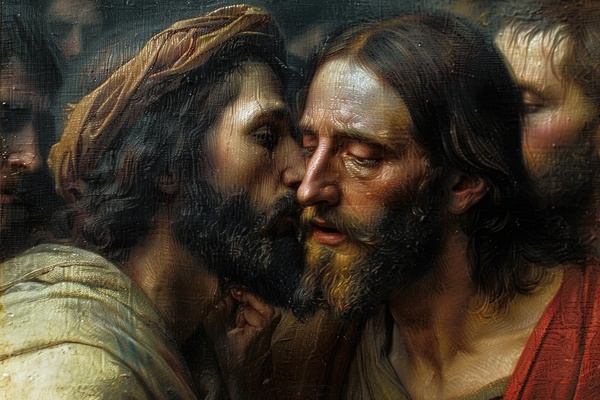
Judas Iscariot is a name forever associated with betrayal, disgrace, and condemnation. But his story carries a sobering warning: It is possible to be close to godly people, surrounded by spiritual truth, and present at extraordinary spiritual events without possessing saving faith.
The tragic story of Judas' betrayal has perplexed Christians for centuries. How could someone who witnessed Jesus' miracles, heard His teaching, and observed His perfectly lived life turn traitor, become Satan's instrument, and ultimately perish? How could someone so close to Jesus be so far from Him?
I remember one Sunday School teacher who ventured to suggest that Judas' deep regret over his betrayal might have brought him redemption in the end. It did not. Carnal regret is not the same as godly sorrow, and remorse is not repentance. There is nothing in Scripture to support the notion that Judas was saved; in fact, there is much to affirm his condemnation. Jesus referred to him as the "son of perdition" (John 17:12) and declared, "It would have been better for that man if he had not been born" (Matthew 26:24).
The best explanation for Judas' betrayal lies in understanding the nature of saving faith. Romans 10:9 tells us that salvation involves confessing with our mouths that Jesus is Lord and believing in our hearts that God raised Him from the dead. The issue is not merely what a person knows or feels, but what has happened in the heart.
The heart, biblically understood, represents the center of our personality, the seat of our thoughts, affections, and will. Saving faith involves the whole person surrendering to the Lordship of Jesus Christ. Jesus said the greatest commandment is to love the Lord our God with all our heart. The LORD likewise promised, "You shall seek Me and find Me when you search for Me with all your heart" (Jeremiah 29:13).
Judas may well have been intellectually convinced that Jesus was the Messiah. But truth can be acknowledged intellectually without being embraced savingly. James reminds us that "even the demons believe- and tremble!" (James 2:19). The demons know the truth, and their knowledge produces an emotional response. Yet neither their knowledge nor their fear amounts to saving faith. They lack what genuine faith demands: submission to God's authority and a surrendered will.
Saving faith involves the will. It is not enough to know the truth or even to be emotionally stirred by it. There must be a willingness to bow before Christ and submit to His authority. The invitation of the gospel is extended to "whoever will," not merely to whoever knows or feels. Jesus rebuked the Pharisees for their unwillingness to believe, saying, "You are not willing to come to Me that you may have life" (John 5:40).
Judas may have known the truth. He may even have experienced powerful emotions during his time with Jesus. But his life demonstrated that he had never truly surrendered to Christ's Lordship. He wanted proximity to Jesus without submission to Jesus.
It is sobering to realize that someone can be intellectually persuaded and emotionally moved by the truth of the gospel presented through a sermon, book, song, film, or personal experience and still remain lost. Biblical salvation is more than an intellectual acknowledgment or an emotional response. It involves repentance and faith- turning from our own way and humbly trusting Christ as Lord and Savior. It is not simply believing certain things about Jesus; it is entrusting ourselves entirely to Him.
I have no idea what was going through Judas' mind when he asked Jesus, "Rabbi, is it I?" But his question raises one that every professing Christian would do well to consider. When profession is not accompanied by practice, when belief is not reflected in behavior, and when people who once identified with Christianity suddenly walk away from the faith, the question becomes painfully relevant.
"Is it I?"
It is a question worth asking- and one that must be answered honestly, in the light of Scripture. After all, being near Jesus is not the same as belonging to Jesus.